

Manufacturing Software Development
Production data scattered across 5 systems? Equipment failures you can't predict? Spending 15+ hours weekly on manual reporting? We've built manufacturing systems for 50+ facilities. Our platforms connect legacy equipment to modern dashboards, predict maintenance needs weeks early, and automate productivity-killing reporting. Most clients see 40-60% efficiency gains within 12 weeks.
Common Industry Challenges
Organizations face unique challenges that impact operations, compliance, and efficiency.
Equipment Downtime Draining Millions
Description
Unplanned equipment failures halting production lines? Downtime costs manufacturers up to $5,600 per minute ($336k per hour according to Aberdeen Research). We've seen automotive suppliers lose $2M annually from preventable failures. The problem isn't old equipment, it's lack of real-time monitoring and predictive maintenance. Your technicians react to breakdowns instead of preventing them. Manual logging means you're blind to failure patterns emerging weeks early. Without IoT sensors and analytics, you're gambling on when critical equipment fails next.
Impact
Our Software Solutions
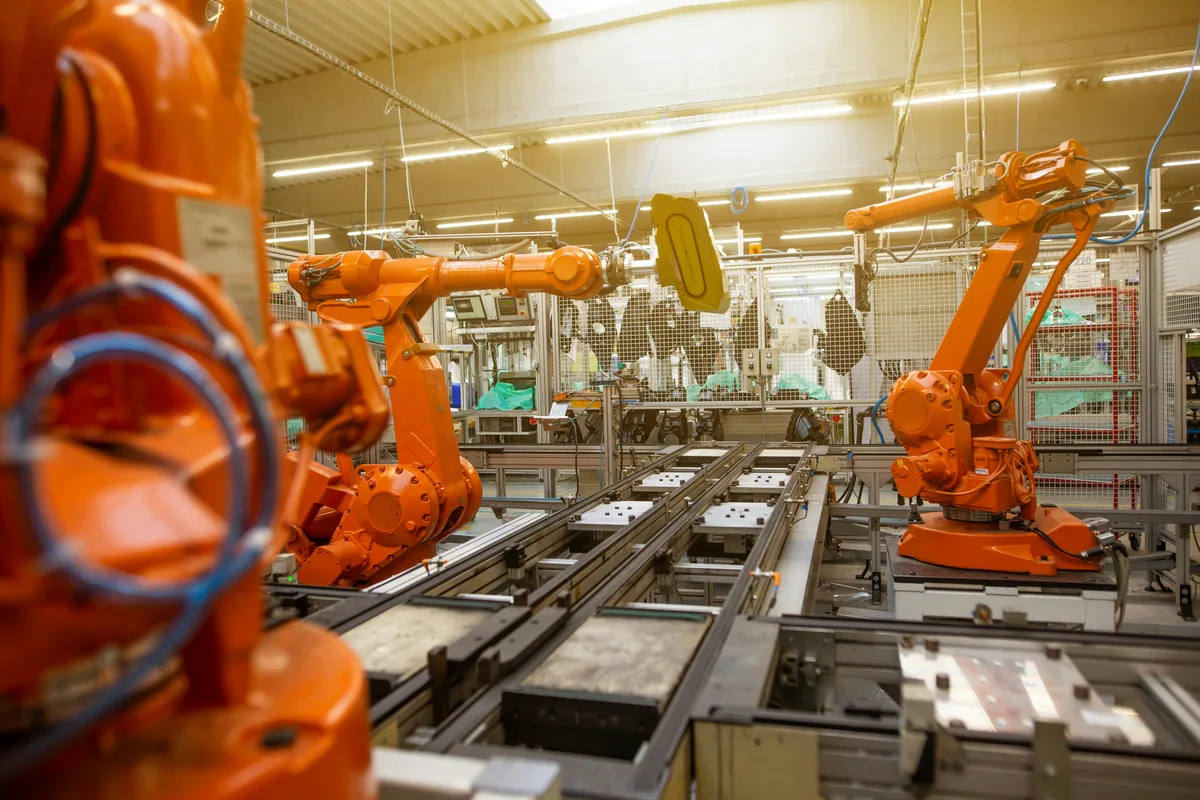
Predictive Maintenance Systems That Prevent Failures
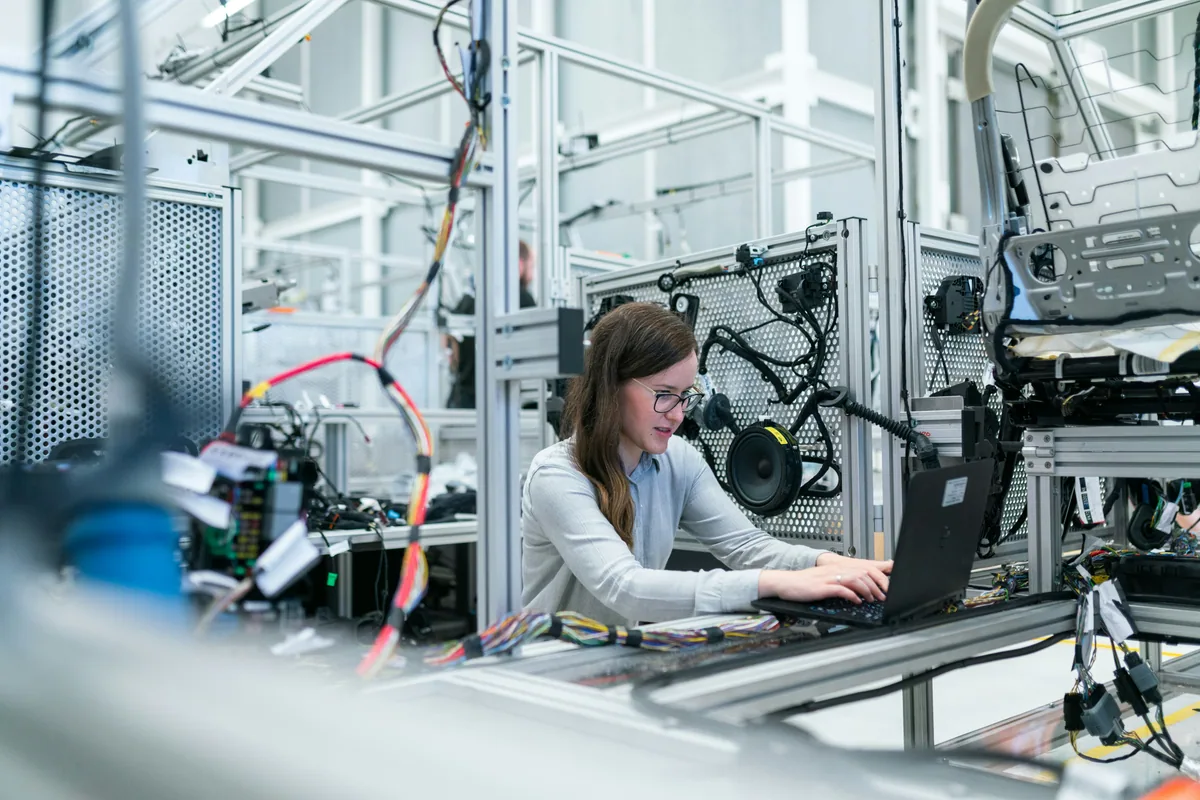
Unified Manufacturing Execution Systems (MES)
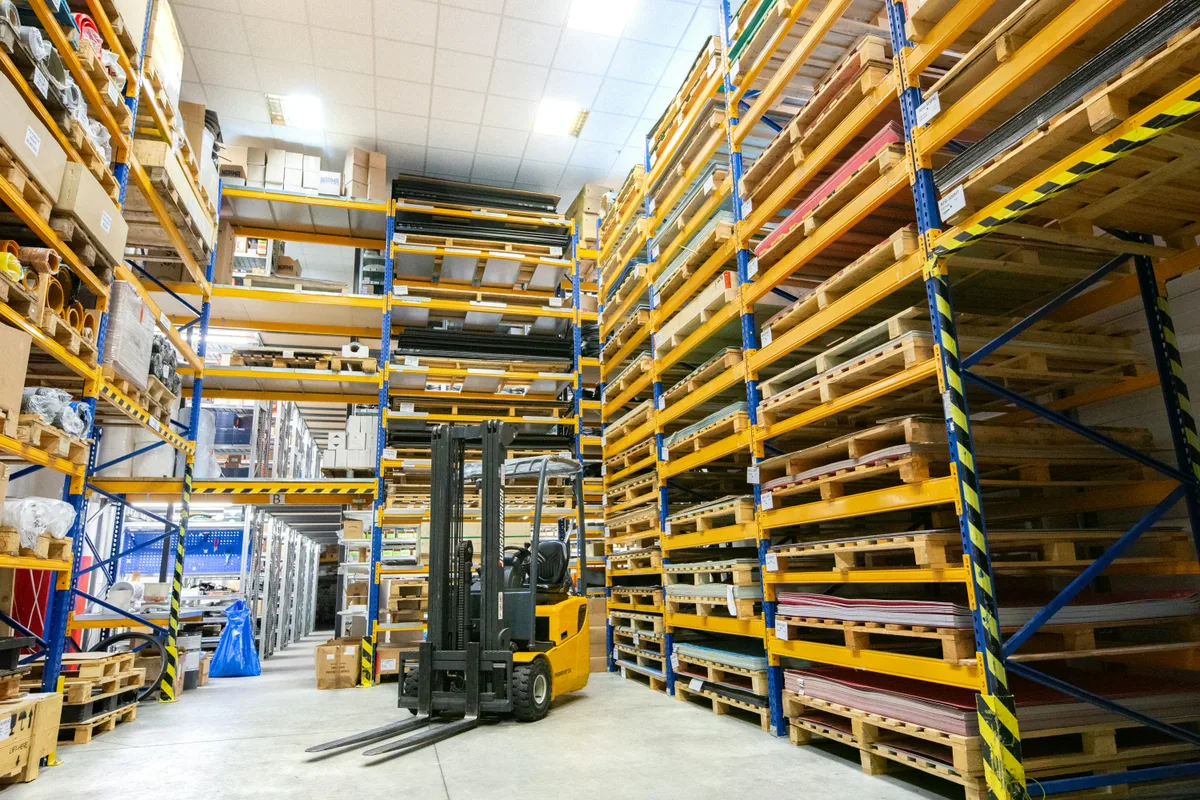
Supply Chain Visibility and Planning Platforms
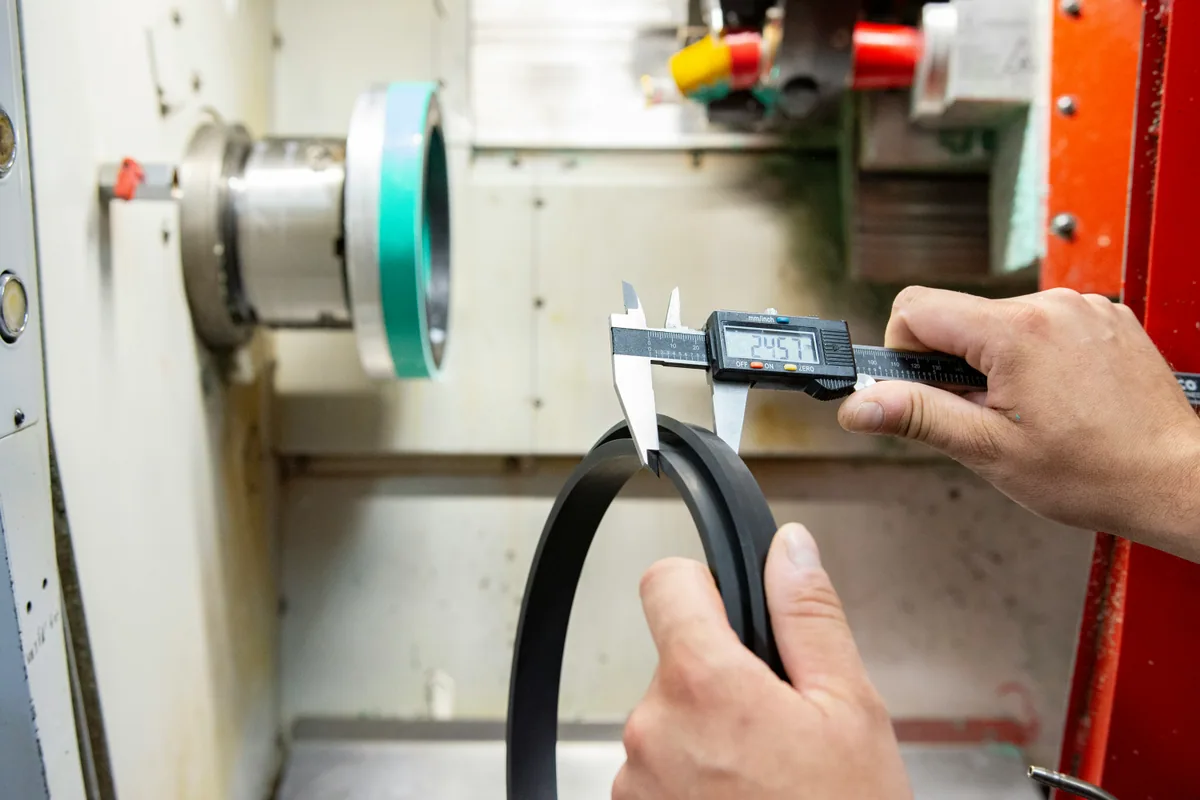
Automated Quality Management Systems
Industrial IoT Integration Platforms
Types of Software We Develop
We specialize in complex, data-heavy industrial applications where off-the-shelf software falls short.
Manufacturing Execution Systems (MES)
Description
MES platforms manage work-in-process on the factory floor, serving as operational backbone between planning and production. Track real-time progress, work instructions, material flow, and quality standards. Modern MES provides complete visibility—current rates, active jobs, material consumption, equipment status. Captures labor hours, downtime, and changeovers automatically. We've built MES for automotive suppliers tracking 50,000+ parts annually and electronics manufacturers managing PCB assembly with 200+ components.
Key Modules & Features

Built for US & Australian Manufacturing Standards
We ensure compliance with:
• FDA 21 CFR Part 11 (Food, Pharmaceutical, Medical Device Manufacturing)
FDA electronic records regulation requires manufacturing systems maintain audit trails, electronic signatures, validations, access controls. Food, pharmaceutical, medical device companies must comply for production, quality, batch records. Non-compliance risks warning letters, shutdowns, recalls.
What we do: We build FDA-compliant systems with complete audit trails, electronic signature workflows, role-based access controls, validation documentation (IQ/OQ/PQ). Maintain tamper-evident records, automatic timestamping, comprehensive reporting for inspections. Supported clients through FDA inspections with zero 483 observations.
• OSHA Safety & Equipment Standards
OSHA requires machine guarding, lockout/tagout procedures, hazard communication, incident reporting. Manufacturing software must track equipment maintenance, safety procedures, worker training. Serious violations average $15,000, willful violations reach $156,000.
What we do: We build systems with digital lockout/tagout procedures, automated training verification before equipment access, incident reporting with root cause analysis, maintenance scheduling for safety-critical equipment. Track operator certifications, enforce safety checks before production, maintain comprehensive documentation for OSHA audits.
• ISO 9001 / AS9100 / IATF 16949 Quality Management
Quality standards (ISO 9001 general, AS9100 aerospace, IATF 16949 automotive) require documented processes, traceability, calibration management, continuous improvement. Often required by major OEMs—automotive suppliers cannot ship to Ford, GM, Toyota without IATF 16949.
What we do: We develop QMS satisfying ISO, AS, IATF requirements: controlled document management with revision history, complete lot traceability raw materials through finished goods, calibration tracking, non-conformance and CAPA workflows, supplier quality management. Maintain evidence registrars need during audits. Multiple clients achieved certification and passed surveillance audits with our platforms.
• ITAR (International Traffic in Arms Regulations)
Defense and aerospace manufacturers must comply with ITAR, restricting technical data access to US persons only. Systems must implement access controls, audit logs, prevent unauthorized transfer, ensure US data storage. Violations carry $1 million per violation and potential criminal charges.
What we do: For ITAR manufacturing, we implement US-only data hosting in US data centers, user authentication verifying US person status, audit logging of all data access and export attempts, secure architecture preventing unauthorized transfer. Separate ITAR-controlled from commercial data, implement need-to-know access controls, provide comprehensive documentation for DDTC compliance reviews.
Important: StepInsight provides compliance support by building software that meets technical requirements of regulations. We are not legal advisors or certification bodies. Manufacturers remain responsible for overall regulatory compliance. We recommend working with qualified regulatory consultants for compliance strategy and certification support.
Technologies & Integrations
| System Type | Common Tools | Our Capabilities |
|---|---|---|
| Industrial Controllers and PLCs | Siemens S7, Allen-Bradley ControlLogix, Rockwell Automation, Mitsubishi, Schneider Electric, Omron PLCs | Direct machine data collection, real-time production monitoring, cycle time tracking, automated part counting, downtime event capture, quality parameter monitoring, OEE calculation, alarm management |
| SCADA and HMI Systems | Ignition by Inductive Automation, Wonderware, GE iFIX, Siemens WinCC, Rockwell FactoryTalk | Process visualization, real-time monitoring dashboards, alarm notification, historical data trending, recipe management, batch tracking, supervisory control integration, mobile HMI access |
| Enterprise Resource Planning (ERP) | SAP S/4HANA, Microsoft Dynamics 365, Oracle NetSuite, Infor CloudSuite, Epicor Kinetic, SYSPRO | Production order synchronization, inventory transactions, material requirements planning, job costing integration, purchase order management, financial data exchange, customer order processing, BOMs and routing synchronization |
| CAD and Engineering Systems | SolidWorks, AutoCAD, Siemens NX, PTC Creo, Autodesk Inventor, CATIA | BOM extraction and synchronization, engineering drawing management, CAD file revision control, product configuration integration, manufacturing drawing distribution, engineering change order processing |
| Quality and Measurement Equipment | CMMs (Zeiss, Mitutoyo), Vision systems (Cognex), Digital micrometers, Force testers, Spectrophotometers | Automated measurement data collection, real-time SPC monitoring, inspection plan execution, gage R&R studies, calibration management, non-conformance tracking, automated CoC generation |
Custom vs. Off-the-Shelf Software
Understanding the differences helps you make the right choice for your organization.
Details:
Built specifically for your production processes, equipment, and business rules, software adapts to you, not the reverseDetails:
Generic processes designed for average manufacturers, forces you to adapt your proven workflows to the software's limitationsDetails:
8-16 weeks for core systems with phased rollouts, focused on your specific requirements, no unnecessary featuresDetails:
6-18 months including extensive configuration, customization, and workflow compromises to fit the platformDetails:
We modernize legacy environments by bridging old ANSI X12/EDIFACT systems with real-time APIs; proven experience connecting to 1980s-era PLCs and SCADADetails:
Limited integration options often stuck on 1970s standards like ANSI X12 or EDIFACT; requires expensive middleware or manual data bridges for older equipmentDetails:
$150k-$400k complete ownership including hosting, no per-user fees, no forced upgrade costs, predictable expensesDetails:
$200k-$500k+ in licensing, implementation, customization, then $40k-$80k annually in maintenance and per-user feesDetails:
We integrate with any industrial equipment regardless of age, Modbus, OPC-UA, Profinet, proprietary protocolsDetails:
Supports popular equipment only, connecting legacy or specialized machines requires expensive custom developmentDetails:
Your development team or ours can modify workflows quickly, you control the roadmap and timing of changesDetails:
Workflow changes require vendor involvement, customization quotes, and upgrade cycles, inflexible and slowManufacturing Software Expertise
Certifications & Expertise
- ISO 27001 Information Security
- Google Cloud platform expertise
- Azure cloud solutions expertise
Industries Served
- Automotive Manufacturing
- Electronics & PCB Assembly
- Aerospace Components
- Food & Beverage Processing
- Industrial Equipment
- Precision Machining
- Medical Device Manufacturing
- Packaging Operations
Services
- Manufacturing Execution Systems (MES)
- Custom ERP Development
- Predictive Maintenance & IoT
- Supply Chain Management
- Quality Management Systems
- Warehouse Management
- Production Planning & Scheduling
Ready to Connect Your Disconnected Factory?
Manual reporting eating 15+ hours weekly? Legacy machines running blind? We've helped 50+ manufacturers solve these exact problems. Our systems connect shop floor to business operations, predict equipment issues before they cause downtime, and deliver measurable ROI within the first year. Let's discuss what's possible for your operation.
Frequently Asked Questions
Custom manufacturing software ranges from $150k to $400k depending on scope. Basic MES connecting 5-10 machines with production tracking starts around $150k-$200k. Comprehensive systems integrating ERP, quality management, and predictive maintenance run $250k-$400k. Often less than off-the-shelf ERP implementations requiring extensive customization. We provide fixed-price proposals after assessing requirements. Most manufacturers achieve ROI within 12-18 months through downtime reduction, labor savings, improved efficiency. Key difference: you pay for exactly what you need, not unused features.
Manufacturing systems typically deploy in 8-16 weeks with phased rollouts. Single production line MES goes live in 8-10 weeks. Multi-line systems with quality integration take 12-16 weeks. Comprehensive ERP replacements run 16-24 weeks for initial modules. We use phased approaches: pilot on one line, prove value, then expand. This beats the 6-18 month implementations typical with off-the-shelf platforms requiring extensive configuration. Implementations are faster because we build exactly what you need, not configure generic platforms.
Yes. We've connected machines from the 1980s and 90s that manufacturers thought couldn't share data. We work with all industrial protocols: Modbus RTU/TCP, OPC-UA, Profinet, EtherNet/IP, BACnet, proprietary protocols. For equipment with no network capability, we add IoT sensors and edge devices. One client had 35 legacy machines with no connectivity—we implemented protocol adapters and edge gateways, providing real-time OEE monitoring for the first time. We handle industrial networking complexity for reliable data collection regardless of equipment age.
ERP manages business operations: financials, planning, purchasing, sales orders, inventory at high level. MES manages shop floor execution: what's being produced right now, on which machines, by which operators, with real-time quality and efficiency tracking. ERP plans what should happen, MES ensures it happens correctly and tracks actual performance. Most manufacturers need both, integrated. ERP schedules production and manages materials. MES executes plans on shop floor and reports results back. We build systems where both communicate seamlessly—production actuals flow to job costing, material consumption updates inventory, quality data links to customer orders.
We implement defense-in-depth security: network segmentation isolating shop floor from business systems, encrypted data transmission, role-based access control, audit logging of all activities. For Industrial IoT, edge computing keeps critical data on-premises with optional cloud sync. We follow IEC 62443 industrial security standards and can deploy entirely on-premises if required. Manufacturing environments have unique challenges—equipment that can't be patched, legacy protocols without encryption, 24/7 operations intolerant of security-induced downtime. Our architecture accounts for these constraints while maintaining security. We've secured systems for aerospace manufacturers with ITAR requirements and medical device companies with FDA regulations.
Yes, we design for scalability from day one. Start with one production line, prove ROI, then expand plant-wide. Architecture supports adding machines, lines, entire facilities without rebuilding. One automotive supplier started with 10 machines in 2020, now has 45 machines across 2 facilities on same platform. No per-user licensing means adding operators doesn't increase costs. Database and application architecture handle enterprise-scale data volumes—we've built systems tracking millions of production events daily. Cloud infrastructure scales automatically during peak loads. Modular design lets you add capabilities over time without disrupting existing operations.
We provide hands-on training during implementation, typically 3-5 days on-site working directly with operators, supervisors, maintenance teams. Training covers daily operations, common scenarios, troubleshooting. We create custom documentation and video guides specific to your workflows. Post-launch support includes direct access to developers who built your system—no tiered support queues. Response times measured in hours, not days. We provide 3-6 months intensive post-launch support while system stabilizes. After that, monthly support packages cover bug fixes, minor enhancements, help desk. Many clients bring development in-house over time—we facilitate transition with knowledge transfer.
Yes, we regularly integrate custom manufacturing systems with major ERP platforms including SAP S/4HANA, Microsoft Dynamics 365, Oracle NetSuite, Infor, Epicor. We build bidirectional interfaces: production schedules flow from ERP to shop floor, actual production and material consumption flow back to ERP for job costing and inventory updates. Integration handles master data synchronization—BOMs, routings, work centers—and transactional data like production confirmations, quality results. We use modern APIs where available and work with older methods (IDocs, flat files, database connections) when necessary. Goal: ERP and shop floor systems work as one cohesive platform.
We start with critical equipment having highest downtime impact, typically 3-5 machines for pilot. Install IoT sensors capturing vibration, temperature, power consumption, operational parameters. Collect baseline data for 4-8 weeks to understand normal operation. Machine learning models learn failure signatures—patterns that precede breakdowns. System alerts maintenance teams 2-4 weeks before predicted failures, specifying likely failure modes. Integrate with CMMS to generate work orders automatically. One packaging line reduced unplanned downtime by 68% within 6 months catching motor, bearing, gearbox issues before catastrophic failures. After proving ROI on pilot equipment, expand to additional machines. System learns continuously, improving predictions over time.
For regulated industries—aerospace (AS9100), medical devices (ISO 13485, FDA 21 CFR Part 11), automotive (IATF 16949)—we build compliance into system architecture. This includes electronic signatures with audit trails, revision-controlled documentation, automated validation protocols, traceability from raw materials through finished goods. We implement validation workflows matching quality system requirements. For FDA-regulated manufacturers, we follow Part 11 guidelines for electronic records and signatures. System maintains complete audit trails: who changed what, when, why. Quality documentation generation automated, reducing compliance labor while improving accuracy. We've supported clients through FDA, EASA, AS9100 audits with zero findings related to software systems we built.