

Real-Time Monitoring and Surveying of Worksites
A web, mobile, and IoT platform that turns data from tens of thousands of sensors into real-time insights for safer, smarter infrastructure projects.
What they needed
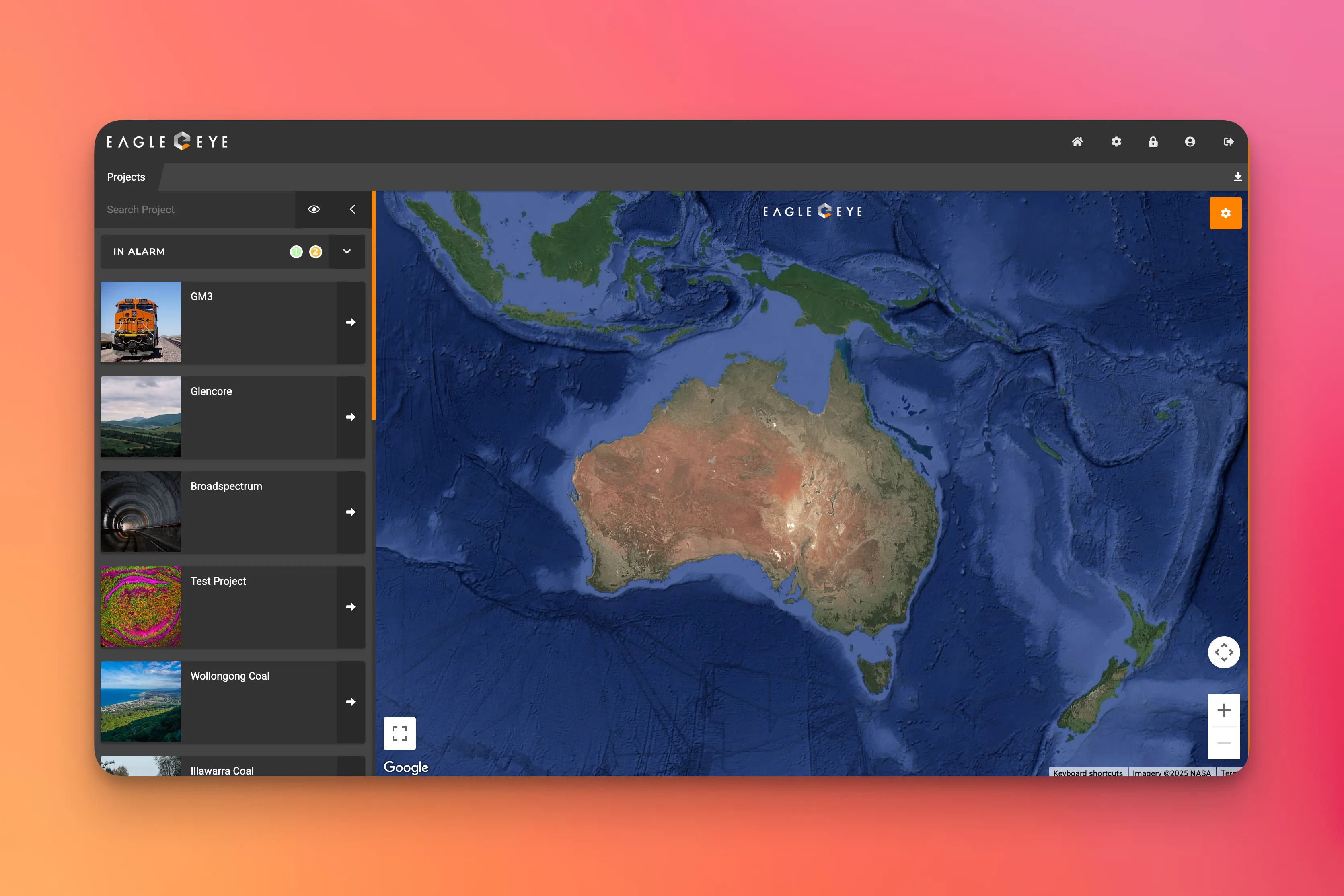
On large construction and infrastructure projects, traditional monitoring systems struggled to surface real-time data in a clear, accessible way. Thousands of sensors would feed into fragmented tools, making it difficult to see the full picture, trigger timely alerts, or share reports across teams. Our client needed a unified monitoring solution that could ingest data from tens of thousands of IoT sensors, visualise it against engineering and geo-spatial context, and make it usable on both site and in the office.
What we delivered
We designed and built Eagle-Eye, a real-time monitoring platform that connects to more than 70,000 IoT sensors across worksites in Australia. The system collects data such as stress, humidity, and wind, then presents it through intuitive web and mobile interfaces, complete with geo-located views, thresholds, alerts, and reporting. By aligning the platform around project safety and operational decision-making, Eagle-Eye gives contractors, engineers, and project owners a single source of truth for what is happening on site.
Key Results
See Eagle-Eye in Action
Explore how Eagle-Eye combines IoT data, geo-spatial context, and real-time alerts to keep complex worksites under control.
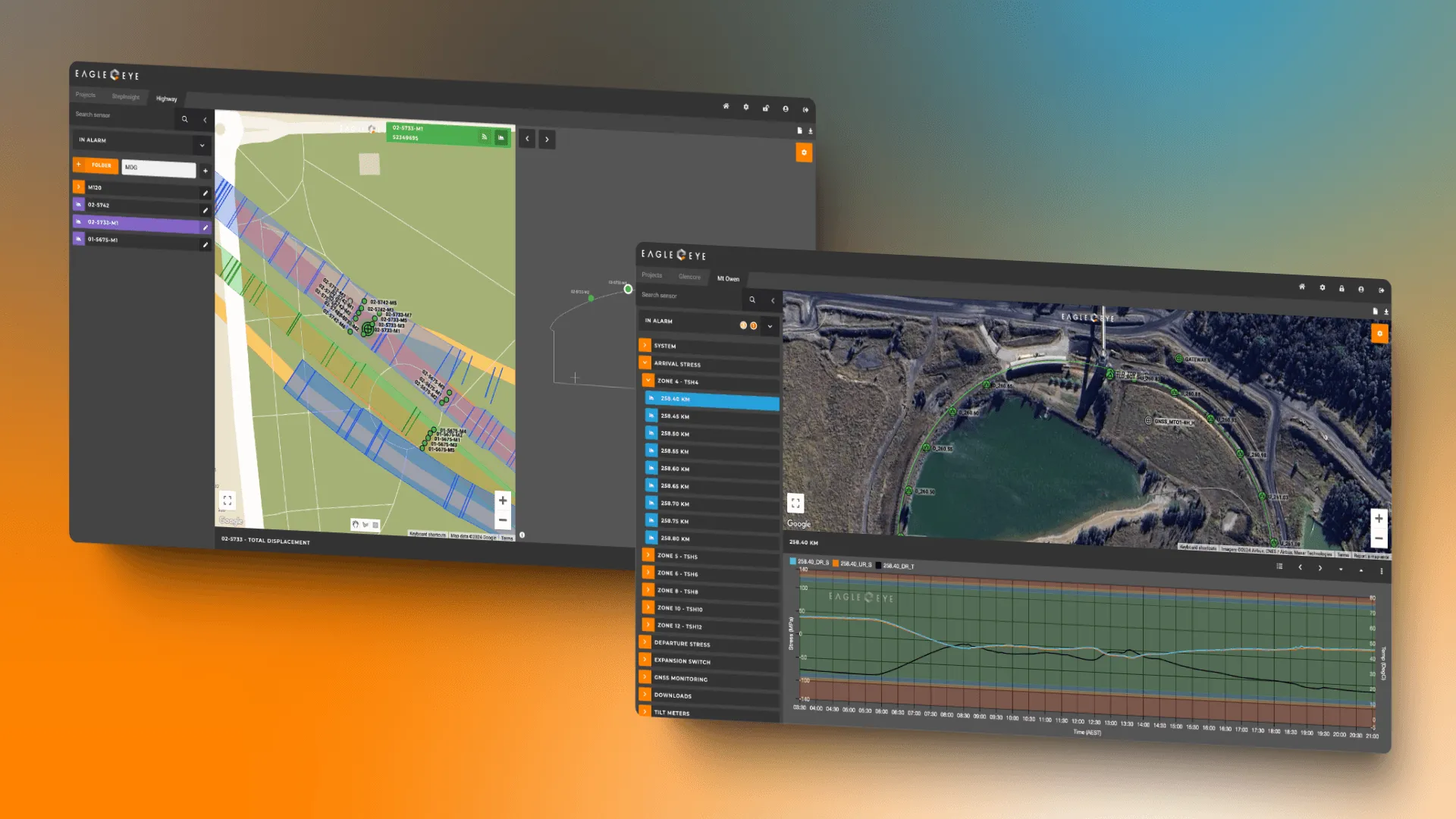
Live Worksite Dashboards
Interactive dashboards overlay sensor readings onto engineering drawings and maps, allowing teams to track conditions in real time and drill into specific areas or sensor groups.
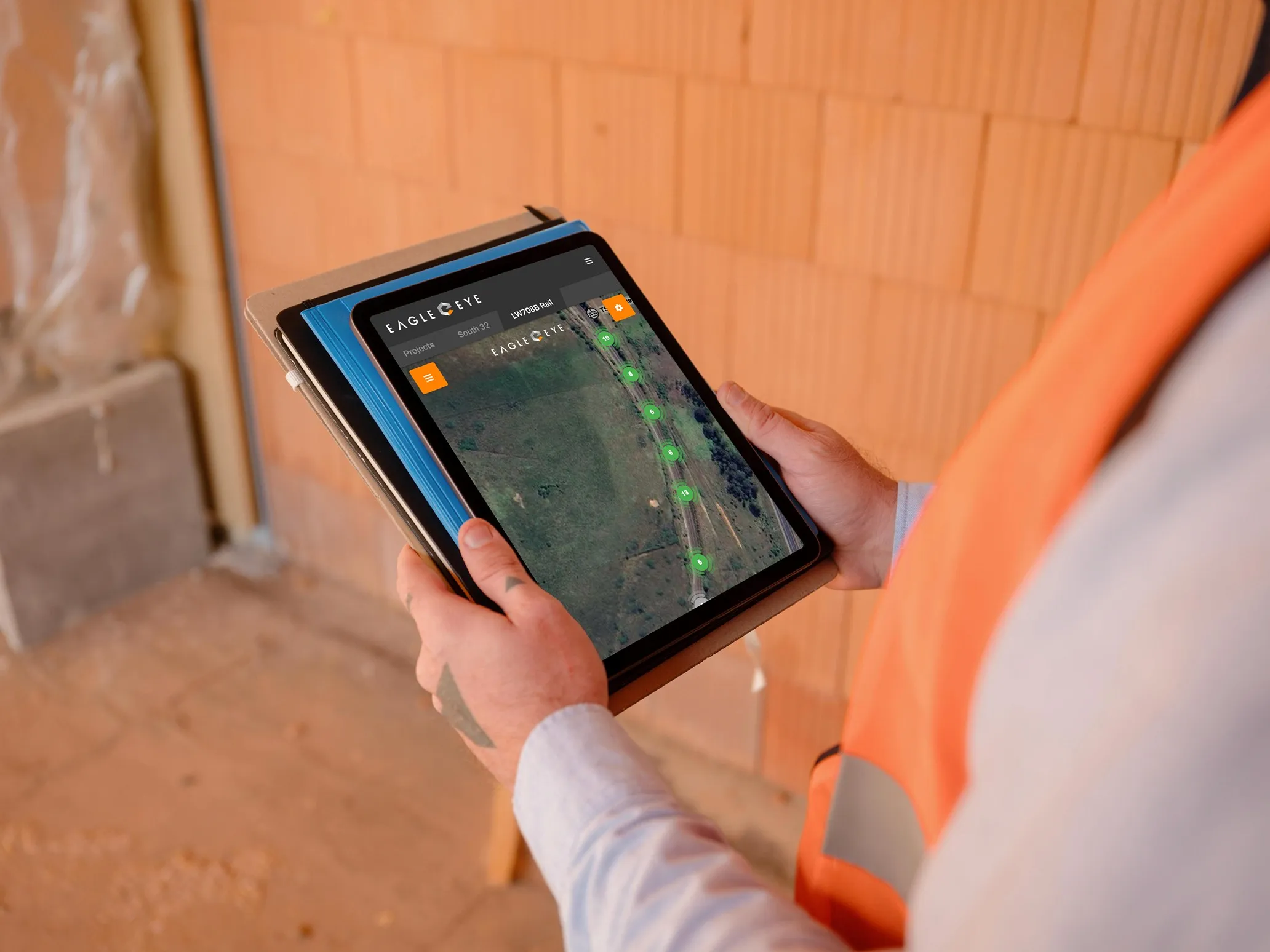
Mobile Monitoring in the Field
Field teams use mobile-friendly views to monitor alarms, review sensor statuses, and validate conditions directly on site, ensuring issues are spotted and addressed quickly.
How we got there
Our approach combined scalable IoT integration with strong UX design and domain-specific visualisation. We implemented a data pipeline capable of handling high volumes of sensor inputs and normalising them for real-time dashboards and analysis. CAD and mapping integrations were used to align sensors with actual structures and work zones, making it easier for engineering teams to interpret readings. We also invested heavily in responsive UI/UX so the same system could be used confidently by teams on mobile devices at the worksite and on desktop in the office. A flexible alerting and reporting layer allowed stakeholders to configure thresholds, receive notifications, and generate project-specific reports without relying on manual exports.
Technologies Used
Explore More Case Studies
View All Case Studies
Ready to start your project?
Let's talk custom software and build something remarkable together.