
IoT Development Services

Hardware Startups, Industrial Equipment Manufacturers, and Enterprise IoT Teams

What You Get

What's Included in Our IoT Development Services

Key deliverable

Embedded Firmware Development

Production-ready firmware optimized for constrained environments with power-efficient algorithms, real-time operating systems, and comprehensive error handling tested across temperature ranges and power conditions.

  • Low-level firmware in C/C++/Rust with RTOS (FreeRTOS, Zephyr) for deterministic execution
  • Device drivers and hardware abstraction layers for sensors, actuators, and peripherals
  • Power management with sleep modes, interrupt-driven wake-up, and adaptive sampling rates
  • Bootloaders with secure boot support and cryptographic firmware verification
Key deliverable

Multi-Protocol Connectivity Stack

Robust device communication implementing industry-standard protocols with automatic reconnection, message queuing, and Quality of Service levels optimized for bandwidth, power, latency, and network topology.

  • MQTT for telemetry with QoS levels 0-2, retained messages, and last will testament
  • CoAP for constrained devices with blockwise transfer and observe pattern
  • LoRaWAN Class A/C for long-range low-power communication (10+ km range)
  • BLE 5.0 for mobile connectivity with GATT services and characteristic design
Key deliverable

Cloud IoT Platform Integration

Seamless integration with enterprise IoT platforms including device provisioning, certificate management, shadow state synchronization, and bidirectional messaging with infrastructure-as-code deployment.

  • AWS IoT Core, Azure IoT Hub, or Google Cloud IoT platform configuration and deployment
  • Device provisioning automation with X.509 certificate management and rotation
  • Device shadow/twin synchronization for offline device state management
  • Cloud-to-device messaging for remote commands, configuration updates, and control
Key deliverable

End-to-End Security Implementation

Defense-in-depth security architecture following NIST and IoT Security Foundation guidelines with secure boot, hardware key storage, encrypted communication, and continuous security monitoring.

  • Secure boot with cryptographic signature verification preventing unauthorized firmware execution
  • Hardware-based key storage using TPM or secure elements preventing credential extraction
  • TLS 1.3 encrypted communication with mutual authentication and certificate pinning
  • Over-the-air (OTA) firmware updates with rollback protection and atomic transactions
Key deliverable

Scalable Data Pipelines

High-throughput telemetry ingestion and processing pipelines handling millions of messages daily with sub-second latency, real-time transformations, and autoscaling infrastructure.

  • Stream processing using Apache Kafka, AWS Kinesis, or Azure Event Hubs for real-time data ingestion
  • Real-time transformations, filtering, aggregations, and routing with data validation
  • Time-series databases (InfluxDB, TimescaleDB) optimized for sensor data and historical queries
  • Data lakes (S3, Azure Data Lake) with schema evolution and retention policy management
Key deliverable

Companion Mobile & Web Applications

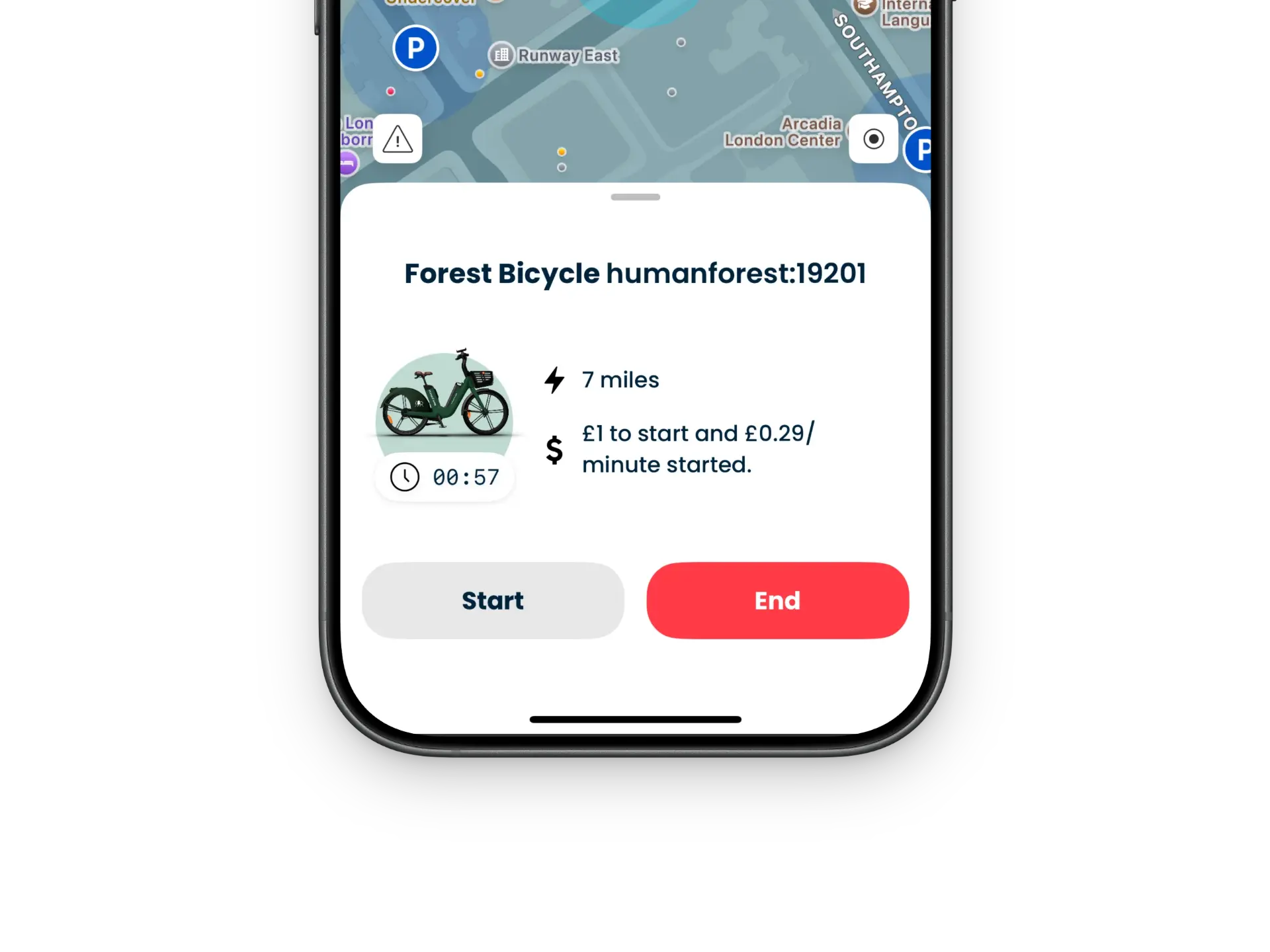
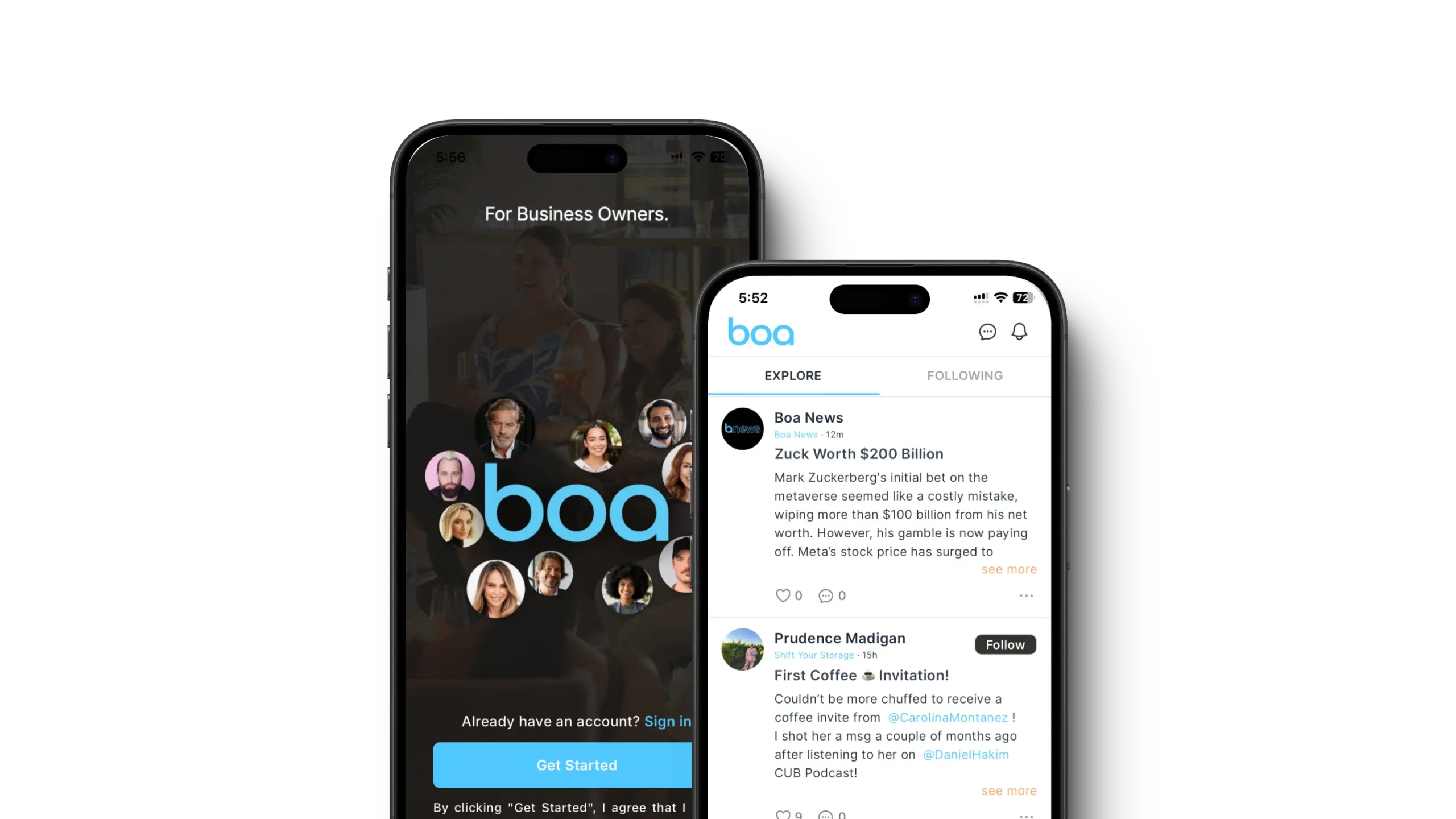
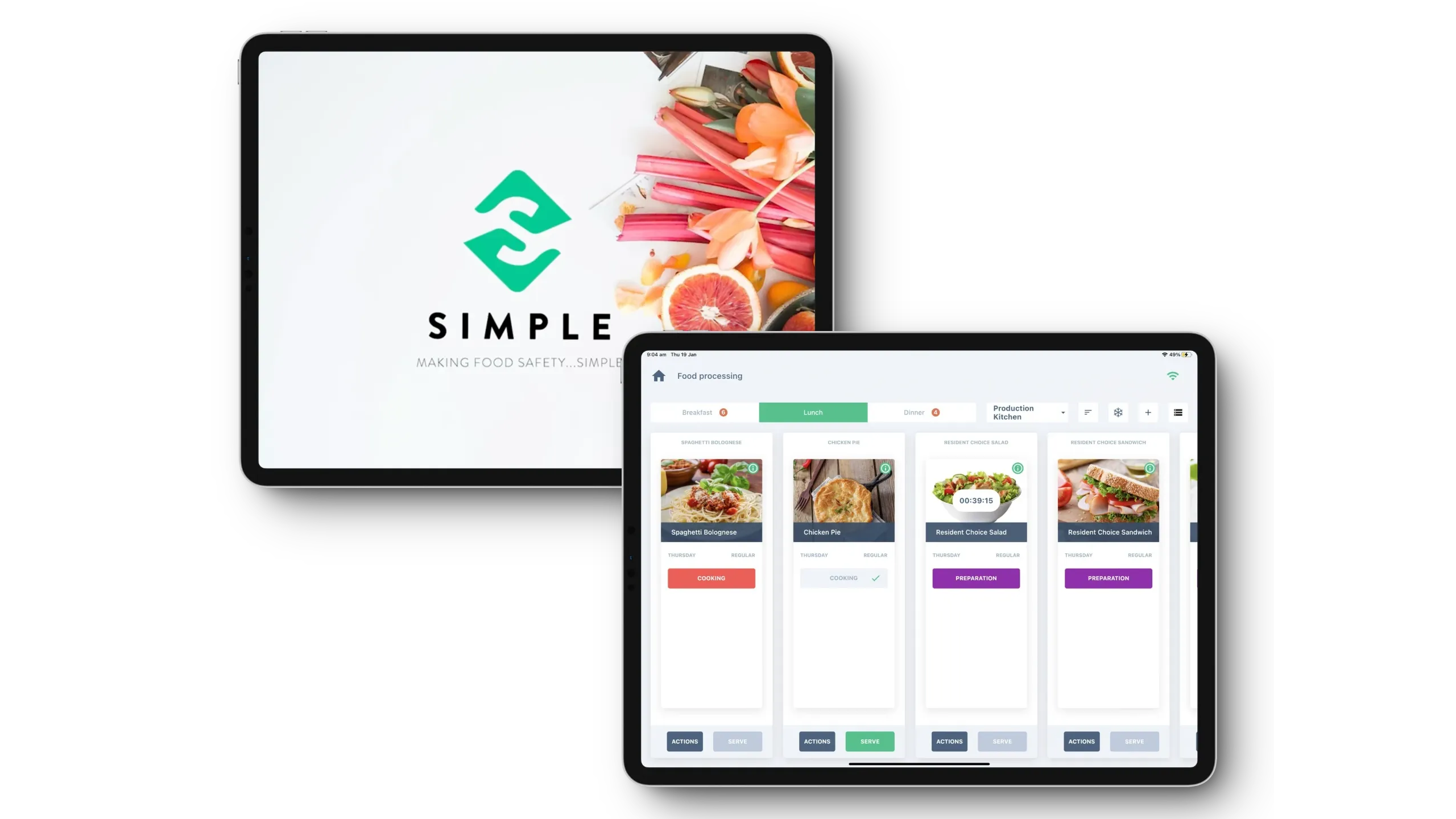
Native mobile applications and responsive web dashboards for device provisioning, real-time monitoring, control, and firmware management with offline-capable design.

  • BLE device discovery, pairing, and onboarding with QR code or NFC provisioning
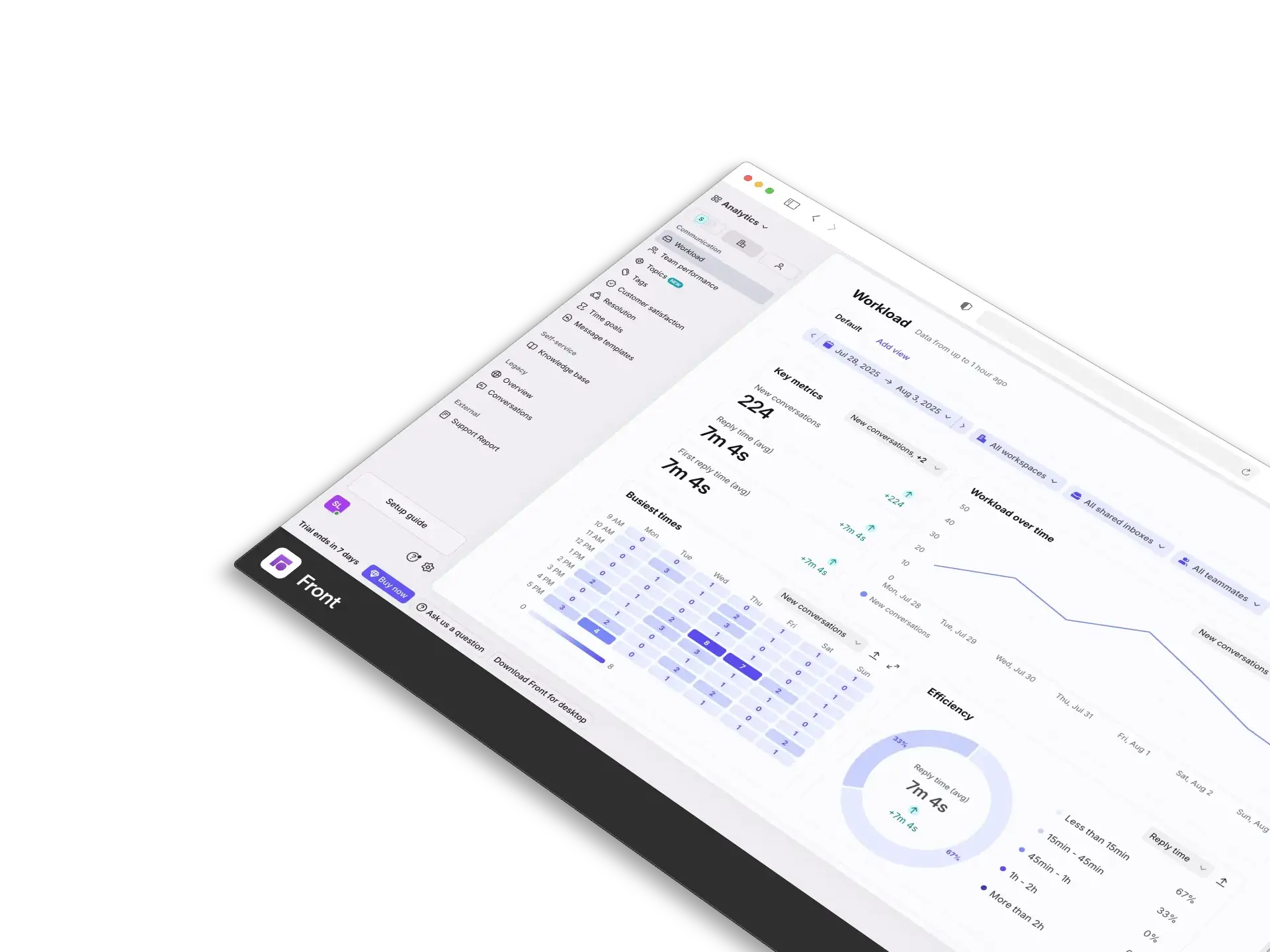
  • Real-time telemetry dashboards with customizable widgets and live data visualization
  • Historical data analysis with time-range selection, filtering, and export capabilities
  • Push notifications and alert management for critical events and threshold violations
Our Process

From Discovery to Delivery

A proven approach to strategic planning

Define device requirements, connectivity needs, and system architecture
01

Discovery & Requirements • 1-2 weeks

Define device requirements, connectivity needs, and system architecture

Deliverable: Requirements specification and system architecture document with protocol recommendations and infrastructure design

View Details
Build production-ready embedded firmware with power optimization
02
Deploy IoT platform, data pipelines, and analytics infrastructure
03
Implement defense-in-depth security with compliance validation
04
Build companion mobile apps and web dashboards
05
Validate system reliability and deploy to production
06

Why Trust StepInsight for IoT Development Services

Experience

  • 10+ years developing embedded systems and cloud IoT solutions across 18 industries
  • 100+ connected devices deployed in production with 99.9%+ average uptime
  • 200+ successful IoT implementations including industrial monitoring, agriculture, logistics, healthcare, and smart building systems
  • Partnered with companies from hardware startups through enterprise-scale deployments
  • Global delivery experience across US, Australia, Europe with offices in Sydney, Austin, and Brussels

Expertise

  • Embedded firmware development in C, C++, and Rust with RTOS (FreeRTOS, Zephyr) for microcontrollers and edge devices
  • Multi-protocol connectivity including MQTT, CoAP, LoRaWAN, BLE, LTE-M, NB-IoT, and Zigbee with custom protocol design
  • Cloud IoT platforms including AWS IoT Core, Azure IoT Hub, Google Cloud IoT with infrastructure-as-code (Terraform, CloudFormation)
  • Security implementation with secure boot, TPM/HSM integration, TLS 1.3, PKI certificate management, and SIEM monitoring
  • Data engineering with stream processing (Kafka, Kinesis), time-series databases (InfluxDB, TimescaleDB), and real-time machine learning

Authority

  • Featured in industry publications for IoT security and industrial automation expertise
  • Guest speakers at embedded systems and IoT conferences across 3 continents
  • Technical advisors to hardware accelerators and IoT startups on architecture and security
  • Clutch-verified with 4.9/5 rating across 50+ client reviews
  • Member of IoT Security Foundation and Embedded Systems Conference advisory board

Ready to start your project?

Let's talk custom software and build something remarkable together.

Custom IoT Development Services vs. Off-the-Shelf Solutions

See how our approach transforms outcomes

Details:

Robust connectivity with automatic reconnection, message queuing, and protocol fallback ensures 99.9%+ uptime. Devices operate autonomously during cloud outages with local decision-making. Field-tested across harsh industrial environments.

Details:

Devices disconnect frequently with no automatic reconnection. Message loss common during network issues. System failures require manual intervention and device replacement. Uptime typically 85-95% with frequent outages.

Details:

Defense-in-depth security with secure boot, hardware key storage (TPM), TLS 1.3 encryption, mutual authentication, OTA updates with rollback protection. Security monitoring with anomaly detection. Protects against 95%+ of common IoT attack vectors.

Details:

Exposed credentials in firmware, unencrypted communication, no firmware signing. Vulnerable to device spoofing, man-in-the-middle attacks, and firmware tampering. No security monitoring or incident detection. High breach risk.

Details:

Optimized firmware and protocols extend battery life to 3-5 years through sleep mode scheduling, interrupt wake-up, and adaptive sampling. 60-80% power consumption reduction eliminates frequent maintenance and enables remote deployment.

Details:

Battery-powered devices drain in weeks or months due to inefficient firmware and continuous radio operation. Frequent battery replacements cost $20-$100 per device visit. Remote deployments impractical due to access limitations.

Details:

Cloud-native architecture scales seamlessly from 10 to 100,000+ devices without changes. Autoscaling infrastructure handles 1,000 to 10+ million messages daily with consistent sub-second latency. Predictable costs with elastic compute and storage.

Details:

Solutions that work with 10 devices crash with 1,000. Data pipelines overflow, databases slow down dramatically. Requires expensive re-platforming and architectural changes. Scaling costs spiral unpredictably.

Details:

Zero-touch fleet management with secure OTA updates enables bug fixes or feature rollouts to thousands of devices within hours. Delta patching, atomic transactions, automatic rollback, A/B testing, and centralized progress monitoring.

Details:

No over-the-air update capability requires technician site visits costing $50-$200 per device. Bug fixes or new features take months to roll out. Devices run outdated, vulnerable firmware indefinitely.

Details:

Real-time data pipelines with stream processing, time-series databases, and machine learning models. Pre-built dashboards with KPIs, trend analysis, and anomaly detection. Predictive maintenance alerts 2-4 weeks before failures reducing downtime by 40%.

Details:

Raw sensor data stored with no processing or analysis. Manual report generation using spreadsheets. No anomaly detection or predictive capabilities. Insights discovered weeks later when reviewing historical data.

Details:

Structured 3-6 month development process with clear milestones and deliverables. Proven architecture patterns and reusable components accelerate delivery. Issues identified and addressed early through phased validation and testing.

Details:

6-12 months of trial and error across firmware, protocols, security, and cloud infrastructure. Frequent rewrites due to poor architectural decisions. Late discovery of scalability or security issues requiring expensive pivots.

Details:

Compliance-ready with security documentation, penetration testing reports, audit trails, and validation for GDPR, HIPAA, ISO 27001. Support for FDA 510(k) medical device submissions. Enterprise procurement requirements satisfied.

Details:

No documentation, security audits, or compliance validation. Cannot demonstrate GDPR, HIPAA, or ISO 27001 compliance. Liability exposure and inability to serve regulated industries or enterprise customers.

Frequently Asked Questions About IoT Development Services

IoT development creates connected device solutions integrating embedded firmware, wireless connectivity, cloud infrastructure, and data analytics to enable remote monitoring, control, and automation. It encompasses microcontroller programming in C/C++/Rust, protocol implementation (MQTT, LoRaWAN, BLE), secure device-to-cloud communication with TLS encryption, real-time data pipelines processing millions of messages, and companion mobile/web applications. Professional IoT development ensures production-grade reliability (99.9%+ uptime), military-grade security (secure boot, hardware encryption), power optimization (3-5 year battery life), and elastic scalability (10 to 100,000+ devices without re-platforming).

Hire IoT development specialists when you're: (1) A hardware startup building your first connected product needing firmware and cloud expertise, (2) An enterprise modernizing legacy equipment by adding connectivity and monitoring, (3) Scaling from prototype to production requiring robust security, OTA updates, and fleet management, (4) Operating in regulated industries requiring HIPAA, GDPR, or ISO 27001 compliance, (5) Experiencing reliability issues with frequent disconnections, battery drain, or security vulnerabilities, or (6) A software team lacking embedded firmware, protocol, or cloud IoT platform experience. The ideal time is during architecture planning before committing to hardware or after prototype validation when production requirements become clear.

IoT development costs $25,000-$40,000 for a 6-8 week proof-of-concept validating technical feasibility with basic firmware and cloud for up to 100 test devices, $60,000-$100,000 for a 12-16 week production MVP launching with 1,000-10,000 devices including full security and OTA updates, or $150,000-$300,000+ for 6-12 month enterprise platforms managing 10,000-100,000+ devices with advanced analytics and compliance. Pricing varies based on device complexity (sensor count, processing power), protocol requirements (LoRaWAN vs cellular), security needs (hardware encryption, compliance), scale targets (device count, message volume), and custom integrations. Most clients save 2-5x their development investment through avoided maintenance costs, extended battery life, and zero-touch fleet management.

Typical deliverables include: (1) Production-ready embedded firmware with source code, build tools, and OTA update mechanism, (2) Cloud infrastructure deployed on AWS/Azure/GCP with device provisioning and data pipelines, (3) Native mobile applications for iOS and Android with source code, (4) Web dashboard for monitoring, analytics, and fleet management, (5) Security documentation including penetration test results and compliance validation, (6) API documentation for device integration and data access, (7) Hardware specifications and recommended component suppliers, and (8) System architecture documentation, deployment guides, and team training materials. All code, infrastructure, and intellectual property are owned by you for ongoing development and commercial use.

IoT development typically takes 6-8 weeks for proof-of-concept validating technical feasibility with basic firmware and cloud backend, 12-16 weeks for production MVP including power-optimized firmware, multi-protocol connectivity, security implementation, OTA updates, data pipelines, and mobile apps, or 6-12 months for enterprise platforms with advanced analytics, multi-region deployment, hardware security modules, and compliance certifications. Timeline depends on device complexity (number of sensors, processing requirements), protocol implementation (single vs. multi-protocol), security requirements (basic encryption vs. hardware HSM and compliance), scale targets (100 vs. 100,000 devices), and custom integrations (third-party APIs, business intelligence tools). Most clients see ROI within 6-12 months through operational efficiency gains.

We implement all major IoT connectivity protocols optimized for your specific requirements. For constrained devices and low power: LoRaWAN (10+ km range, 3-5 year battery), NB-IoT and LTE-M (cellular with deep building penetration), and Zigbee (mesh networking). For general IoT: MQTT (lightweight pub/sub with QoS levels 0-2), CoAP (RESTful for constrained devices), and HTTP/HTTPS (web integration). For mobile connectivity: BLE 5.0 (mobile apps, wearables) and WiFi (high bandwidth, local networks). Protocol selection depends on range requirements (meters to kilometers), bandwidth needs (bytes to megabytes per message), power constraints (battery vs. mains powered), latency tolerance (real-time vs. periodic), and network availability (cellular coverage, WiFi infrastructure).

We implement defense-in-depth security following NIST Cybersecurity Framework and IoT Security Foundation guidelines. Device layer: Secure boot with cryptographic signature verification preventing unauthorized firmware, hardware-based key storage using TPM or secure elements preventing credential extraction, and tamper detection. Communication layer: TLS 1.3 encrypted communication with mutual authentication (device and cloud verify each other), certificate rotation policies, and certificate pinning preventing man-in-the-middle attacks. Cloud layer: Role-based access control, API authentication with OAuth 2.0, credential vaulting with AWS Secrets Manager or Azure Key Vault, and security monitoring with SIEM integration. Update layer: OTA firmware updates with cryptographic signing, atomic transactions, and automatic rollback protecting against malicious updates. We conduct regular security audits, penetration testing, and compliance validation for GDPR, HIPAA, and ISO 27001 providing documentation necessary for enterprise procurement and regulatory approval.

Battery life depends on sensors, transmission frequency, protocol, and environmental conditions. We achieve 3-5 years on a single battery (or 10+ years with solar recharging) for low-frequency sensors (1-24 readings daily) using LoRaWAN Class A or NB-IoT through aggressive power management. Techniques include: sleep mode scheduling where devices sleep 99.9% of time consuming microamps, interrupt-driven wake-up triggered by sensor thresholds or timers, minimal radio-on time with connection establishment optimizations, adaptive sampling reducing frequency when conditions stable, edge processing analyzing data locally to transmit only actionable insights, and protocol selection (LoRaWAN uses 60-80% less power than cellular). This represents 60-80% power consumption reduction compared to naive implementations and eliminates frequent battery replacements costing $20-$100 per device visit.

Yes. Our cloud-native architecture scales seamlessly from 10-device proof-of-concept to production deployments managing 100,000+ endpoints without architectural changes or service degradation. Autoscaling infrastructure automatically provisions additional compute, storage, and network capacity during traffic spikes while scaling down during quiet periods optimizing costs. Message throughput can grow from 1,000 messages/day to 10+ million messages/day with consistent sub-second latency using managed IoT services (AWS IoT Core, Azure IoT Hub), serverless compute (Lambda, Functions), stream processing (Kinesis, Event Hubs), and database sharding with read replicas. This elasticity eliminates costly re-platforming during growth, supports aggressive scaling without upfront infrastructure overprovisioning, and provides predictable per-device cost models. We load test systems at 10x target scale validating performance before production deployment.

Over-the-air (OTA) firmware updates enable remote software updates to deployed IoT devices without physical access, eliminating technician site visits costing $50-$200 per device. This capability is critical for: bug fixes deployed to thousands of devices within hours instead of months of manual updates, security patches addressing newly discovered vulnerabilities before exploitation, new features rolled out to existing deployments creating revenue opportunities, and configuration changes adapting device behavior to changing requirements. Our OTA system includes: delta patching minimizing bandwidth by sending only changed bytes, atomic transactions ensuring update integrity with automatic rollback if update fails preventing bricked devices, cryptographic signing verifying update authenticity preventing malicious firmware, fleet segmentation enabling staged rollouts with A/B testing and canary deployments, and centralized dashboards showing real-time update progress, device health metrics, and rollback controls. This saves 30+ hours monthly in manual update workflows for deployments with 100+ devices.

Yes. We build native mobile applications using React Native or Flutter for cross-platform iOS and Android deployment, plus responsive web dashboards using React for desktop access. Mobile apps include: BLE device discovery and pairing with QR code or NFC provisioning, device onboarding wizards guiding users through WiFi configuration and account linking, real-time telemetry dashboards with customizable widgets showing live sensor data, historical data visualization with time-range selection and filtering, push notifications and alert management for critical events, firmware update management with progress tracking, and offline-capable design with local caching ensuring functionality during intermittent connectivity. Web dashboards provide: fleet-wide monitoring with device health status and connectivity indicators, advanced analytics with custom queries and data exports, user management with role-based permissions, alert configuration and notification routing, and administrative controls for device provisioning and decommissioning.

We build comprehensive data analytics pipelines ingesting millions of messages daily with real-time processing and historical analysis. Stream processing using Apache Kafka, AWS Kinesis, or Azure Event Hubs performs real-time transformations, filtering, aggregations, and routing with sub-second latency. Time-series databases (InfluxDB, TimescaleDB) optimized for sensor data enable fast queries across millions of data points with automatic downsampling and retention policies. Pre-built dashboards show key performance indicators, trend analysis, anomaly detection highlighting unusual patterns, and drill-down capabilities exploring specific devices or time periods. Machine learning models detect patterns indicating impending equipment failures 2-4 weeks before critical breakdowns enabling predictive maintenance that reduces unplanned downtime by 40% and extends equipment lifespan by 15-25%. Data exports integrate with business intelligence tools (Tableau, Power BI, Looker) for cross-functional analysis and executive reporting with custom visualizations.

We've delivered IoT solutions across 18 industries including: manufacturing (equipment monitoring, predictive maintenance), agriculture (soil sensors, irrigation controllers, livestock tracking), logistics (fleet tracking, cold chain monitoring, asset tracking), healthcare (patient monitoring devices, medication dispensers, diagnostic equipment), smart buildings (HVAC optimization, occupancy sensing, energy management), retail (inventory tracking, customer analytics, smart shelves), construction (equipment tracking, site monitoring, safety sensors), oil & gas (remote well monitoring, pipeline integrity), utilities (smart meters, grid monitoring, outage detection), consumer products (connected appliances, wearables, home automation), hospitality (room automation, guest experience), automotive (telematics, predictive diagnostics), industrial automation (robotics, quality monitoring), environmental monitoring (air quality, water quality), security (access control, surveillance), telecommunications (network monitoring), public sector (smart city, traffic management), and sports (athlete monitoring, equipment tracking).

What our customers think

Our clients trust us because we treat their products like our own. We focus on their business goals, building solutions that truly meet their needs — not just delivering features.

Lachlan Vidler
We were impressed with their deep thinking and ability to take ideas from people with non-software backgrounds and convert them into deliverable software products.
Jun 2025
Lucas Cox
Lucas Cox
I'm most impressed with StepInsight's passion, commitment, and flexibility.
Sept 2024
Dan Novick
Dan Novick
StepInsight work details and personal approach stood out.
Feb 2024
Audrey Bailly
Trust them; they know what they're doing and want the best outcome for their clients.
Jan 2023

Ready to start your project?

Let's talk custom software and build something remarkable together.