Cloud Monitoring & Incident Response

SaaS Companies, Platform Teams, and Operations Leaders

What You Get

What's Included in Our Cloud Monitoring & Incident Response

Key deliverable

Observability Infrastructure

Gain complete visibility into system behavior, dependencies, and performance with comprehensive observability.

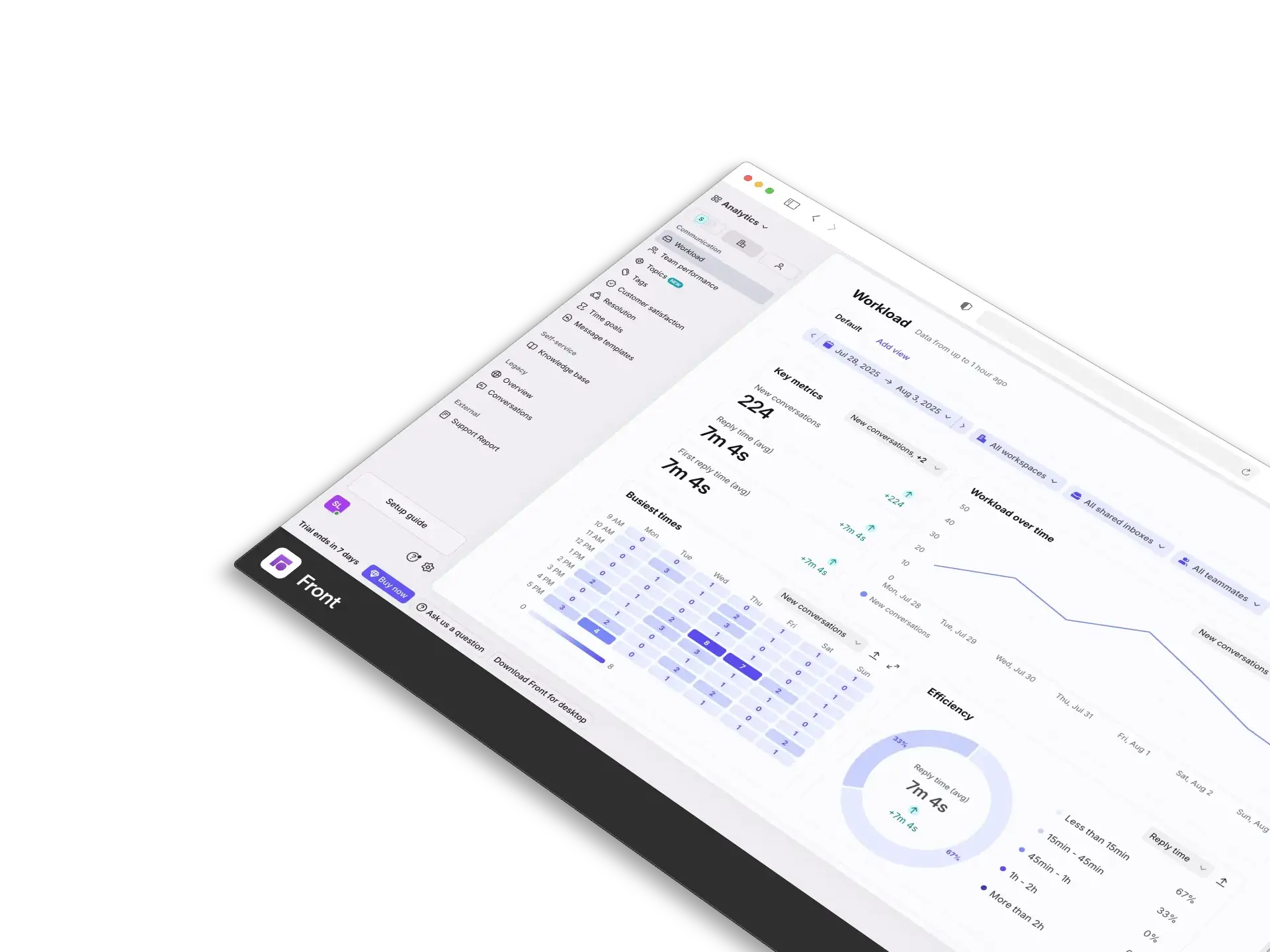
  • Real-time metrics dashboards showing system health, resource utilization, and application performance
  • Centralized logging infrastructure aggregating logs from all services and infrastructure components
  • Distributed tracing to visualize request flows across microservices and identify bottlenecks
  • Custom metrics and instrumentation for business-critical workflows and user journeys
Key deliverable

Intelligent Alerting System

Get notified about issues before users notice with smart alerting that reduces noise and fatigue.

  • 24/7 automated alerting for system health, performance degradation, errors, and availability issues
  • Multi-channel notifications via PagerDuty, Slack, email, SMS, and phone calls based on severity
  • Alert routing and escalation policies ensuring the right people respond to the right incidents
  • Intelligent alert grouping and deduplication to reduce alert fatigue by 60-80%
Key deliverable

Incident Response Procedures

Respond to incidents consistently and efficiently with documented procedures and on-call management.

  • On-call schedule management with rotation policies, shift swaps, and escalation paths
  • Incident severity classification (P0-P4) with clear definitions and response time SLAs
  • Incident communication templates for internal teams and external stakeholders
  • Incident command structure defining roles (incident commander, communications lead, technical lead)
Key deliverable

Runbooks & Playbooks

Document tribal knowledge and standardize response procedures for common incidents and maintenance tasks.

  • Runbooks for common incidents including diagnostic steps, remediation actions, and rollback procedures
  • Operational playbooks for routine maintenance tasks like deployments, scaling, and backups
  • Troubleshooting guides with decision trees and step-by-step debugging procedures
  • Integration testing and rollback procedures for high-risk changes
Key deliverable

Root Cause Analysis & Post-Mortems

Turn incidents into learning opportunities with blameless post-mortems and continuous improvement.

  • Structured post-incident review process with timeline reconstruction and impact analysis
  • Root cause analysis using Five Whys, Fishbone diagrams, and fault tree analysis
  • Blameless post-mortem culture focusing on systems and processes, not individuals
  • Action item tracking with ownership, deadlines, and verification of completion
Key deliverable

Tool Implementation & Integration

Deploy and configure industry-leading monitoring and incident management tools tailored to your stack.

  • Tool selection and implementation (Datadog, Grafana, Prometheus, New Relic, CloudWatch, or open-source stacks)
  • Integration with existing infrastructure, CI/CD pipelines, and development workflows
  • Dashboard design showing metrics that matter organized by team, service, or user journey
  • Cost optimization of monitoring infrastructure reducing observability spend by 20-40%
Our Process

From Discovery to Delivery

A proven approach to strategic planning

Understand your infrastructure, incidents, and observability gaps
01

Assessment & Planning • 1 week

Understand your infrastructure, incidents, and observability gaps

Deliverable: Monitoring strategy document with tool recommendations, architecture design, and implementation roadmap

View Details
Deploy metrics, logging, and tracing infrastructure
02
Configure intelligent alerts and on-call rotation
03
Document incident response procedures and operational runbooks
04
Train your team on tools, procedures, and best practices
05
Refine alerting, update runbooks, and improve reliability
06

Why Trust StepInsight for Cloud Monitoring & Incident Response

Experience

  • 10+ years implementing monitoring and incident response systems across 18 industries
  • 200+ successful observability deployments including SaaS platforms, fintech systems, healthcare applications, and e-commerce sites
  • Helped organizations achieve 99.9%+ uptime and reduce MTTR by 50-70% through systematic incident response
  • Partnered with companies from pre-seed concept through Series B scale
  • Global delivery experience across US, Australia, Europe with offices in Sydney, Austin, and Brussels

Expertise

  • Observability tools including Datadog, Grafana, Prometheus, New Relic, CloudWatch, Elastic Stack, and open-source monitoring
  • Site Reliability Engineering (SRE) practices including SLOs, error budgets, toil reduction, and post-mortem culture
  • Incident management frameworks including ITIL, PagerDuty Incident Response, and Google SRE best practices
  • Distributed systems observability for microservices, Kubernetes, serverless, and multi-cloud architectures
  • On-call management and alert engineering reducing false positives while improving detection accuracy

Authority

  • Featured in industry publications for observability and site reliability engineering expertise
  • Guest speakers at DevOps and SRE conferences across 3 continents
  • Strategic advisors to accelerators and venture capital firms on portfolio company operational maturity
  • Clutch-verified with 4.9/5 rating across 50+ client reviews
  • Member of DevOps Institute and USENIX Association for SRE practitioners

Ready to start your project?

Let's talk custom software and build something remarkable together.

Custom Cloud Monitoring & Incident Response vs. Off-the-Shelf Solutions

See how our approach transforms outcomes

Details:

24/7 automated monitoring detects issues within 2-5 minutes before users are impacted. Proactive alerts prevent customer-facing outages.

Details:

Users report issues before your team knows there's a problem. Mean time to detection (MTTD) is 30-60 minutes or longer.

Details:

Centralized logging, distributed tracing, and metrics dashboards pinpoint root cause in 30-60 minutes. Clear visibility into system behavior.

Details:

Engineers spend 4-8 hours digging through scattered logs across systems trying to understand what failed and why.

Details:

Structured incident response with severity classification, escalation procedures, documented runbooks, and defined roles reducing chaos.

Details:

Chaotic response with unclear roles, no documented procedures, and reliance on tribal knowledge from senior engineers.

Details:

MTTR reduced to 30-90 minutes through runbooks, observability tools, and trained team. 50-70% faster incident resolution.

Details:

Mean time to resolution (MTTR) is 4-8 hours due to lack of visibility, unclear procedures, and knowledge bottlenecks.

Details:

10-20 actionable alerts per day with intelligent grouping, deduplication, and threshold tuning. 60-80% reduction in false positives.

Details:

Either no alerts (miss real issues) or 100-200+ daily alerts causing fatigue where critical issues get buried in noise.

Details:

Real-time dashboards show system health, performance metrics, and service dependencies. Proactive identification of degradation before outages.

Details:

No understanding of system health, performance trends, or dependencies. Flying blind until something breaks.

Details:

Blameless post-mortems with root cause analysis and tracked action items prevent 50-70% of repeat incidents through systematic improvement.

Details:

Same incidents repeat every 3-6 months because there's no post-incident analysis or learning from failures.

Details:

On-call engineers feel confident with documented runbooks, clear escalation paths, and reliable tools. Improved morale and retention.

Details:

On-call is stressful with constant interruptions, unclear procedures, and fear of production changes. Engineer burnout and turnover.

Frequently Asked Questions About Cloud Monitoring & Incident Response

Cloud monitoring and incident response encompasses continuous observability of your infrastructure and applications, proactive alerting when issues occur, and structured procedures for resolving incidents quickly. This includes collecting metrics, logs, and traces from your systems; configuring alerts that notify the right people at the right time; establishing on-call rotations and escalation procedures; documenting runbooks for common issues; and conducting post-incident reviews to prevent recurrence. It's especially valuable when you're scaling infrastructure, have uptime SLAs with customers, or need to reduce time spent fighting production fires. Professional monitoring and incident response reduces mean time to detection (MTTD) from 30-60 minutes to 2-5 minutes and mean time to resolution (MTTR) from 4-8 hours to 30-90 minutes.

Hire monitoring and incident response services when you're: (1) Experiencing frequent downtime or performance issues without understanding root causes, (2) Scaling infrastructure and need production-grade observability for enterprise customers with uptime SLAs, (3) Suffering from alert fatigue with 100+ daily notifications burying real issues, (4) Spending excessive engineering time debugging production issues due to lack of visibility, (5) Facing the same incidents repeatedly without systematic prevention, or (6) Needing to demonstrate operational maturity for enterprise sales, compliance audits, or investor due diligence. The ideal time is before scaling challenges become critical or when incidents are costing more than $50,000 annually in downtime and lost productivity. Most organizations see immediate ROI within the first prevented incident.

Cloud monitoring and incident response services are typically included as part of our cloud infrastructure support packages. This includes observability infrastructure setup, tool configuration, 24/7 alerting, incident response procedures, runbooks, and ongoing monitoring optimization. Pricing varies based on infrastructure complexity, number of services, alert volume, and support package scope. Most clients prevent $50,000-$500,000 in annual downtime costs through faster incident detection and resolution, achieving 5-10x ROI on their monitoring investment. Ongoing tool costs (Datadog, New Relic, etc.) typically range from $500-$5,000+ monthly depending on data volume and feature requirements. Contact us to discuss your specific monitoring needs and support package options.

Typical deliverables include: (1) Monitoring infrastructure with configured tools (Datadog, Grafana, Prometheus, etc.) collecting metrics, logs, and traces, (2) Custom dashboards organized by team, service, and user journey showing system health and performance, (3) 24/7 alerting system with threshold tuning, routing policies, and multi-channel notifications, (4) On-call schedule and escalation procedures with PagerDuty or similar integration, (5) 10-15 documented runbooks covering common incidents with diagnostic and remediation steps, (6) Incident response framework including severity classification, communication templates, and roles, (7) Bug portal integration for client-visible incident tracking and transparency, (8) Post-incident review process and templates for root cause analysis, and (9) Training documentation and operational guides. All infrastructure and documentation are fully owned by you and your team is trained to independently operate and maintain systems.

Monitoring and incident response implementation typically takes 4-8 weeks depending on scope and infrastructure complexity. A Monitoring Foundation engagement takes 4 weeks and covers tool deployment, basic alerting, and essential runbooks for simple infrastructures (10-20 services). Comprehensive Incident Response takes 6-8 weeks and includes full observability infrastructure, 24/7 alerting, detailed runbooks, incident procedures, and bug portal integration for growing platforms (20-50 services). Enterprise Reliability Partnerships run 8-12 weeks for complex microservices architectures (50+ services) requiring advanced monitoring, SLO frameworks, and chaos engineering. Timeline depends on infrastructure size, existing monitoring maturity, and team availability for training. Most clients see immediate value during implementation as initial alerts and dashboards provide visibility into previously hidden issues.

StepInsight differentiates through: (1) Real operational experience, not just consulting - our team has built and run production systems at scale, not just advised on monitoring, (2) Bug portal integration providing your clients transparency into incident status and resolution progress, building trust and reducing support tickets, (3) 24/7 health monitoring included as standard, not an expensive add-on - we monitor your system availability, performance, and health around the clock, (4) Blameless post-mortem culture emphasizing systems and learning over blame, reducing fear of incident response and improving retention, and (5) Tool-agnostic approach - we recommend the right monitoring tools for your stack and budget, not push expensive enterprise licenses you don't need. We deliver working observability infrastructure and trained teams, not theoretical frameworks and documentation that sits unused.

Monitoring answers 'Is there a problem?' by tracking known metrics and alerting when thresholds are exceeded (CPU usage, error rates, response times). Observability answers 'Why is there a problem?' by providing deep visibility into system behavior through metrics, logs, and traces that allow you to explore and understand unknown-unknown failures. Traditional monitoring requires you to predict what might fail and set alerts. Observability enables you to ask arbitrary questions about system behavior during incidents without pre-configured alerts. In practice, you need both: monitoring for alerting on known issues and observability for diagnosing unknown issues. Our service implements comprehensive observability infrastructure (metrics, logs, distributed tracing) plus intelligent monitoring and alerting, giving you both prevention and diagnosis capabilities. Most modern cloud systems benefit from observability-first approaches due to complexity of microservices and distributed architectures.

We're tool-agnostic and recommend the right monitoring solution for your stack, budget, and requirements. Common tools we implement include: (1) Datadog - comprehensive commercial solution with metrics, logs, traces, and APM; excellent for growing SaaS companies needing turnkey observability ($15-$30 per host/month), (2) Grafana Cloud or self-hosted - flexible open-source option with Prometheus for metrics, Loki for logs, and Tempo for traces; cost-effective for technical teams ($50-$5,000/month depending on scale), (3) New Relic - APM-focused platform with strong application performance monitoring and user experience tracking, (4) AWS CloudWatch - native AWS monitoring for simple architectures already on AWS; minimal additional cost but limited features, or (5) Elastic Stack (ELK) - self-hosted logging and metrics for organizations requiring data sovereignty. We evaluate your infrastructure, team expertise, and budget during assessment to recommend the optimal solution. All implementations include training so your team can independently operate and maintain chosen tools.

We reduce alert fatigue through: (1) Baseline analysis understanding normal system behavior to set intelligent thresholds that catch real anomalies without noise, (2) Alert grouping and deduplication combining related alerts (e.g., one service failure causing 10 downstream errors triggers one grouped alert, not 10 separate notifications), (3) Severity classification with clear response time SLAs ensuring only P0/P1 critical alerts page on-call engineers immediately while P2-P4 alerts queue during business hours, (4) Smart routing directing alerts to appropriate teams and escalating only if unacknowledged, reducing unnecessary interruptions, (5) Anomaly detection using machine learning to identify true deviations from baseline rather than arbitrary static thresholds, and (6) Scheduled maintenance windows suppressing expected alerts during deployments and known maintenance. Our clients typically reduce alert volume from 100-200+ per day to 10-20 actionable alerts, improving signal-to-noise ratio by 60-80%. This prevents missed critical alerts while reducing on-call engineer burnout and turnover.

A runbook is a documented step-by-step procedure for diagnosing and resolving specific incidents or performing operational tasks. Runbooks capture tribal knowledge from senior engineers and enable junior team members to resolve issues independently without escalation. They typically include: incident symptoms and detection, diagnostic steps to confirm root cause, remediation actions with commands or procedures, rollback steps if remediation fails, and escalation path if issue persists. Without runbooks, organizations rely on senior engineers' memory for incident response, creating bottlenecks, longer resolution times, and knowledge loss during turnover. Our clients create 10-15 runbooks for most common incidents (database connection failures, memory leaks, API rate limiting, cache invalidation, deployment rollbacks, etc.) reducing MTTR by 40-60% and enabling any team member to respond effectively. Advanced runbook automation executes remediation automatically for routine issues like restarting services or clearing caches, further reducing manual response time.

The bug portal provides your clients real-time visibility into incident status, resolution progress, and system health, building trust through transparency. When an incident occurs, clients can: (1) See incident status (investigating, identified, monitoring, resolved) without needing to email support, (2) View estimated resolution time and receive automatic updates as status changes, (3) Subscribe to incident-specific notifications rather than wonder what's happening, (4) Review post-incident reports explaining what failed, why it failed, and prevention steps taken, and (5) Access historical uptime data and scheduled maintenance windows. This transparency reduces support ticket volume by 30-50% as clients self-serve incident status rather than repeatedly asking 'what's happening?' It also improves customer satisfaction scores by 15-25% as clients appreciate honesty and communication during outages. For enterprise customers requiring uptime SLAs, the bug portal demonstrates operational maturity and provides documentation for SLA credit processes.

A post-incident review (also called post-mortem or incident retrospective) is a structured analysis conducted after resolving an incident to understand root cause, document learnings, and prevent recurrence. Effective post-mortems use a blameless approach focusing on systems and processes, not individuals, creating psychological safety for honest discussion. The process includes: (1) Timeline reconstruction showing what happened, when, and what actions were taken, (2) Root cause analysis using Five Whys, Fishbone diagrams, or fault tree analysis to identify underlying system issues, (3) Impact assessment quantifying downtime, affected users, and revenue impact, (4) Action item identification with specific preventive measures, assigned owners, and deadlines, and (5) Follow-up verification ensuring action items are completed. Organizations conducting regular post-mortems reduce repeat incidents by 50-70% through systematic improvement. We facilitate post-mortem culture, provide templates, train your team on facilitation techniques, and track action items to completion. Many clients find post-mortems become their most valuable learning tool, turning costly incidents into organizational knowledge.


Yes, optimizing existing monitoring infrastructure is a common engagement. We conduct a monitoring assessment evaluating: (1) Coverage gaps - are critical services, workflows, or user journeys missing instrumentation? (2) Alert quality - what percentage are false positives vs. real issues? Are real issues missed? (3) Dashboard usability - can teams quickly understand system health or are dashboards cluttered and confusing? (4) Tool utilization - are you paying for expensive features you're not using? And (5) Team confidence - does your team trust and rely on monitoring or ignore it? Based on assessment findings, we tune alert thresholds based on baseline analysis, consolidate scattered metrics into cohesive dashboards, implement missing instrumentation for blind spots, reduce tool costs by right-sizing subscriptions, and provide training on advanced features your team isn't leveraging. Most clients improve alert signal-to-noise ratio by 60-80%, reduce monitoring costs by 20-40%, and significantly improve team confidence in their observability systems within 4-6 weeks.

Yes, we offer flexible ongoing support including: (1) Post-implementation support (included in all engagements) - 2-3 months of alert tuning, runbook updates, and question answering as your team adapts to new systems, (2) Monthly retainer advisory (4-8 hours/month) - ongoing alert tuning, dashboard refinements, new runbook creation as infrastructure evolves, and post-mortem facilitation for major incidents ($2,000-$5,000/month), (3) Quarterly reliability reviews - analyze incident trends, identify systemic issues, and recommend architectural improvements to prevent future incidents, or (4) Fractional SRE services - our senior SRE team joins your on-call rotation, participates in incident response, and provides reliability engineering expertise without full-time hiring costs ($8,000-$15,000/month). Many clients start with comprehensive implementation, use included post-implementation support during transition, then move to quarterly reviews or fractional SRE as their needs mature. Ongoing support ensures your monitoring evolves with your infrastructure and maintains effectiveness as you scale.

Our 24/7 monitoring continuously checks your system health, availability, and performance around the clock, alerting your team (and optionally our on-call SRE team) when issues are detected. We monitor: (1) Availability - synthetic checks verifying critical endpoints are reachable and responding correctly every 1-5 minutes from multiple geographic locations, (2) Performance - response times, database query latency, API endpoint performance, and page load speeds with alerts when degradation is detected, (3) Errors - application error rates, server errors (5xx), client errors (4xx), and exception tracking with immediate notification when error rates spike, (4) Resource utilization - CPU, memory, disk, and network usage across infrastructure with capacity alerts preventing resource exhaustion, (5) Business metrics - critical workflow completion rates (signups, checkouts, API calls) to detect issues affecting user-facing functionality even if infrastructure appears healthy. The 24/7 system includes smart alerting that escalates based on severity and time of day, ensuring P0/P1 critical issues reach on-call engineers immediately while P2-P4 issues queue for business hours, reducing unnecessary nighttime pages while ensuring true emergencies get immediate attention.

What our customers think

Our clients trust us because we treat their products like our own. We focus on their business goals, building solutions that truly meet their needs — not just delivering features.

Lachlan Vidler
We were impressed with their deep thinking and ability to take ideas from people with non-software backgrounds and convert them into deliverable software products.
Jun 2025
Lucas Cox
Lucas Cox
I'm most impressed with StepInsight's passion, commitment, and flexibility.
Sept 2024
Dan Novick
Dan Novick
StepInsight work details and personal approach stood out.
Feb 2024
Audrey Bailly
Trust them; they know what they're doing and want the best outcome for their clients.
Jan 2023

Ready to start your project?

Let's talk custom software and build something remarkable together.